LLM SEO: What SMB Brands Need to Know
By Emma Pugsley, Co-founder ·
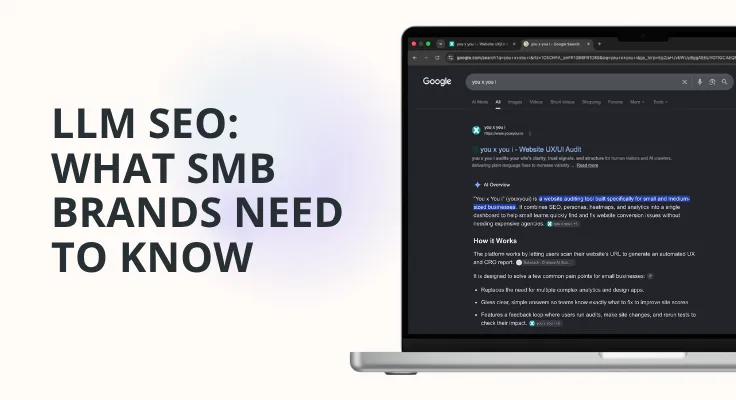
Your next customer might never see your website in a list of search results. Instead, they’ll ask ChatGPT, Perplexity, or Google’s AI Mode a question, and the assistant will either cite your brand as a source or skip you entirely. AI tools don’t rank your website; they either cite it or ignore it. That single shift is what “LLM SEO” is about, and small brands can win at it without an enterprise budget.
Here’s what SMB brands actually need to know.
LLM SEO, GEO, AEO. What’s the difference?
The terms get used interchangeably, but there’s a useful hierarchy:
- Traditional SEO earns rankings in search results
- AEO (answer engine optimization) earns answer-box extractions. Think featured snippets, People Also Ask, and voice answers
- GEO (generative engine optimization) is the newest layer: structuring content so large language models cite your brand when they generate an answer.
“LLM SEO” is the everyday umbrella term for that third layer.
They’re not separate projects. They share the same foundation, because of how LLMs actually work.
How LLMs pick who to cite
Every AI answer is built in two stages:
- Retrieval: a classic search index returns a set of candidate pages for the query. This step rewards traditional SEO: indexable pages, on-page relevance, technical health, and links still get you into the candidate pool
- Synthesis: the LLM re-reads those candidates and decides which passages contain extractable, specific, attributable facts worth quoting.
The synthesis filter is brutal. A page can rank on page one and still never get cited, because the answer is buried in a long narrative instead of stated plainly. This is the single most important thing SMBs need to internalise: getting into the retrieval pool is table stakes; getting quoted is a separate, winnable game.
The signals that actually matter
Research into what LLMs cite converges on a handful of levers:
- Answer blocks (40–60 words). AI models favour clear, self-contained answer blocks over long-form narratives that bury the lead. Lead each section with a direct, quotable answer, then elaborate underneath
- Citable specifics. Vague claims get skipped; concrete facts get quoted. Numbers, named attributes, dates, prices, and specifics are what the model weaves into answers. Keyword stuffing, by contrast, has negligible or even negative effect
- Structured data. The same schema stack that powers AEO (FAQPage, HowTo, Article, Breadcrumb, and for stores, Product) helps LLMs parse and trust your content
- Off-site mentions and authority. LLMs are risk-averse and lean toward sources they can corroborate. One analysis found sites with very large referring-domain counts are markedly more likely to be cited, and ChatGPT visibly leans on broadly authoritative sources like Wikipedia and Reddit. SMBs can’t out-authority a giant, but they can earn niche mentions, get listed in the directories and roundups their category trusts, and build genuine review presence
- Bot access. None of this matters if the AI crawlers can’t reach you. Beyond Googlebot and Bingbot, LLM SEO requires allowing GPTBot, ClaudeBot, PerplexityBot, and GoogleOther in your robots rules. Check this first; it’s the most common blocker.
A practical LLM SEO playbook for SMBs
You don’t need a big team. You need the fundamentals done deliberately:
- Fix crawler access. Confirm your robots.txt and any firewall rules allow the major AI bots. Consider an llms.txt file to guide them to your key content
- Restructure for extraction. Put a 40–60 word answer at the top of each key page and section, under a descriptive question-style header
- Trade adjectives for facts. Replace “market-leading, premium service” with specific, verifiable claims like numbers, timeframes, materials, and outcomes
- Ship the schema stack. FAQPage and Article at minimum; Product and aggregateRating if you sell online
- Build topical depth. Cluster related guides, comparisons, and FAQs so the AI sees genuine expertise in your niche, not one thin page
- Earn corroboration. Pursue mentions, listings, reviews, and PR in the places your category’s buyers (and the LLMs) already trust
- Reinforce E-E-A-T (Experience, Expertise, Authoritativeness, and Trustworthiness). Named authors with credentials, publish and update dates, and a clear brand identity all feed AI trust
- Measure citations. The KPI shifts from rank position to citation count per query and referral traffic from AI surfaces (WatEase).
Why this is good news for small brands
Traditional SEO increasingly rewards scale; the biggest budgets and backlink profiles win. LLM SEO’s synthesis layer rewards something an SMB can control: clarity, specificity, and genuine expertise stated plainly. A focused small brand that answers its niche’s questions better than anyone can get cited alongside far larger competitors, because the model is hunting for the clearest citable fact, not the biggest logo.
The catch is that most SMB sites are still written for humans skimming a page, not for a machine extracting a fact. Closing that gap is the whole opportunity.
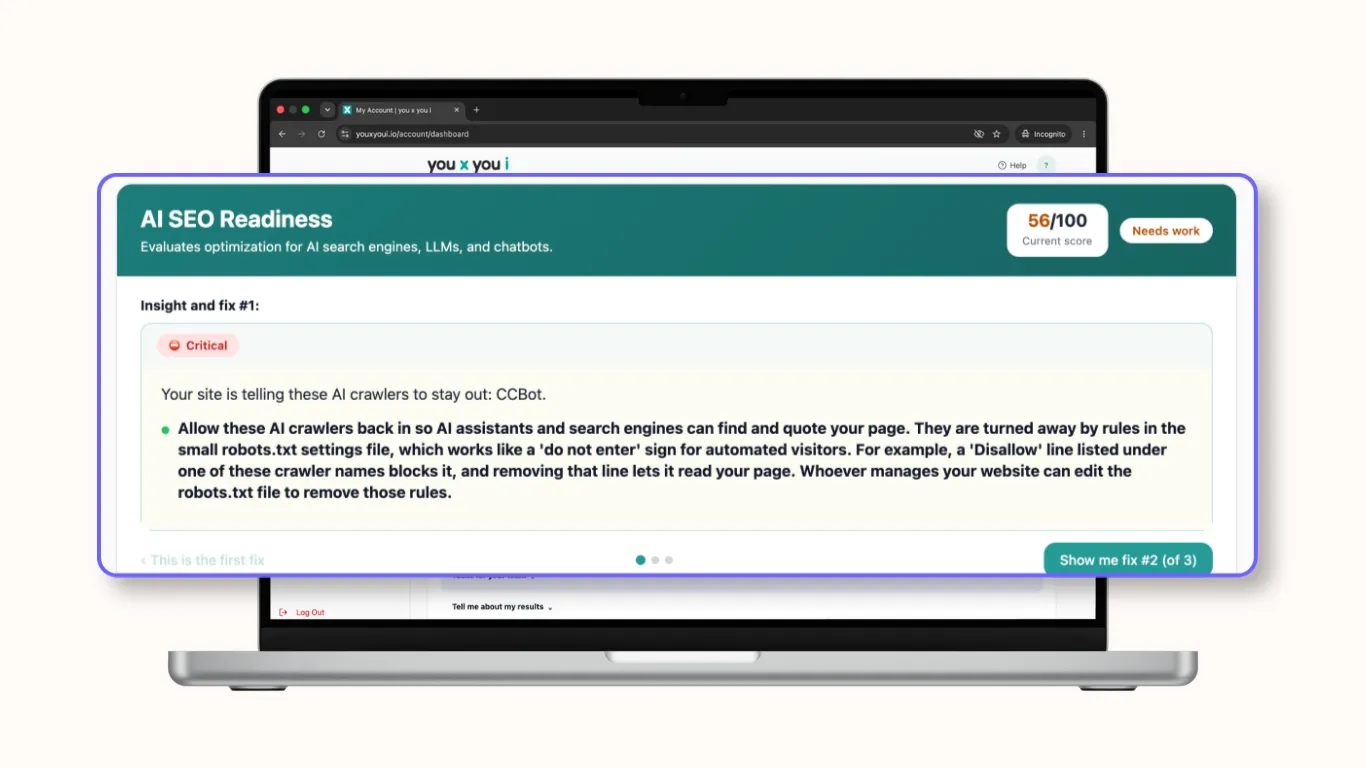
Want to know whether AI systems can find, read, and cite your site today? Start a website audit, and we’ll check your crawler access, structure, and schema alongside your conversion fundamentals.