Website Audits: What We Check and Why It Matters
By Emma Pugsley, Co-founder ·
A good website audit should do one thing well: show why a site is not converting as well as it could. For most SMB stores, that means looking past surface-level design and finding the friction points that make people hesitate and leave, before buying.
That matters because many sites don’t have one dramatic problem. They have a mix of small issues, like weak product pages, unclear trust signals, mobile friction, messy structure, or too many technical distractions… and those problems stack up fast. A proper audit makes those hidden issues visible in plain language.
Why audits matter

Most store owners already know something is off. Traffic is coming in, but sales are not keeping up, or the site looks fine, but still feels hard to use. An audit helps turn that vague feeling into a specific list of problems that can actually be fixed.
That is especially useful for SMB teams because they usually don’t have the time or budget for long research projects. They need a fast read on what’s blocking conversion now, not a broad strategy deck.
What we look at
A useful audit starts with the pages that matter most: the homepage, product pages, category pages, and checkout path. Those are the places where visitors decide whether the site feels trustworthy and easy enough to continue with.
We also look at the supporting structure around those pages. If the site is hard to navigate, poorly linked, uses jargon, or is cluttered with too many apps or scripts, the experience becomes harder than it should be, even when the design looks polished.
Product pages first
Product pages usually tell the real story. Research on SMB stores keeps showing that weak product pages are one of the most common UX problems, especially when the page doesn’t give enough decision support near the buy button.
That can mean unclear hierarchy, weak imagery, missing size or variation clarity, thin descriptions, or trust cues that sit too far away from the buying decision. If the page gives information but doesn’t help people decide, it’s not doing its job.
Mobile comes next
Mobile is often where the problem gets worse. Baymard’s current benchmark says 62% of mobile sites are still rated mediocre or worse, which means a lot of stores are still making the smaller-screen experience hard!
In an audit, that usually shows up as tiny tap targets, cramped layouts, too much scrolling, or a page that feels built for desktop first. On a phone, those issues are not small details; they’re sales issues.

Checkout friction
Checkout is where small issues turn into lost revenue. Hidden shipping costs, extra fields, forced registration, and limited payment methods are all classic reasons buyers abandon at the final step.
A store can look healthy in analytics and still be losing orders right at the end. That’s why checkout is not just a technical handoff; it’s a conversion page in its own right.
Trust and clarity
Trust is one of the easiest things to underestimate. If shipping, delivery, returns, and proof of quality are unclear or hidden, visitors have to guess, and guessing usually slows or stops the sale.
The same goes for the value proposition. If a visitor can’t quickly tell what the brand sells, who it’s for, and why it matters, the page is making them do too much work before they buy.

Structure and clutter
A site can also underperform because of background issues that don’t look dramatic at first. Confusing navigation, poor internal linking, too many apps, bloated themes, and random technical add-ons all make the experience slower and heavier than it should be.
These issues matter for SEO too, because clear linking and site structure help search engines understand the site and help visitors move from information to purchase. When the structure is weak, both discovery and conversion suffer.
What a good audit reveals
The point of an audit isn’t to judge the site. It’s to show the pattern underneath the site’s performance. Most SMB stores don’t fail because of one huge flaw. They fail because a handful of small ones stack up and create hesitation.
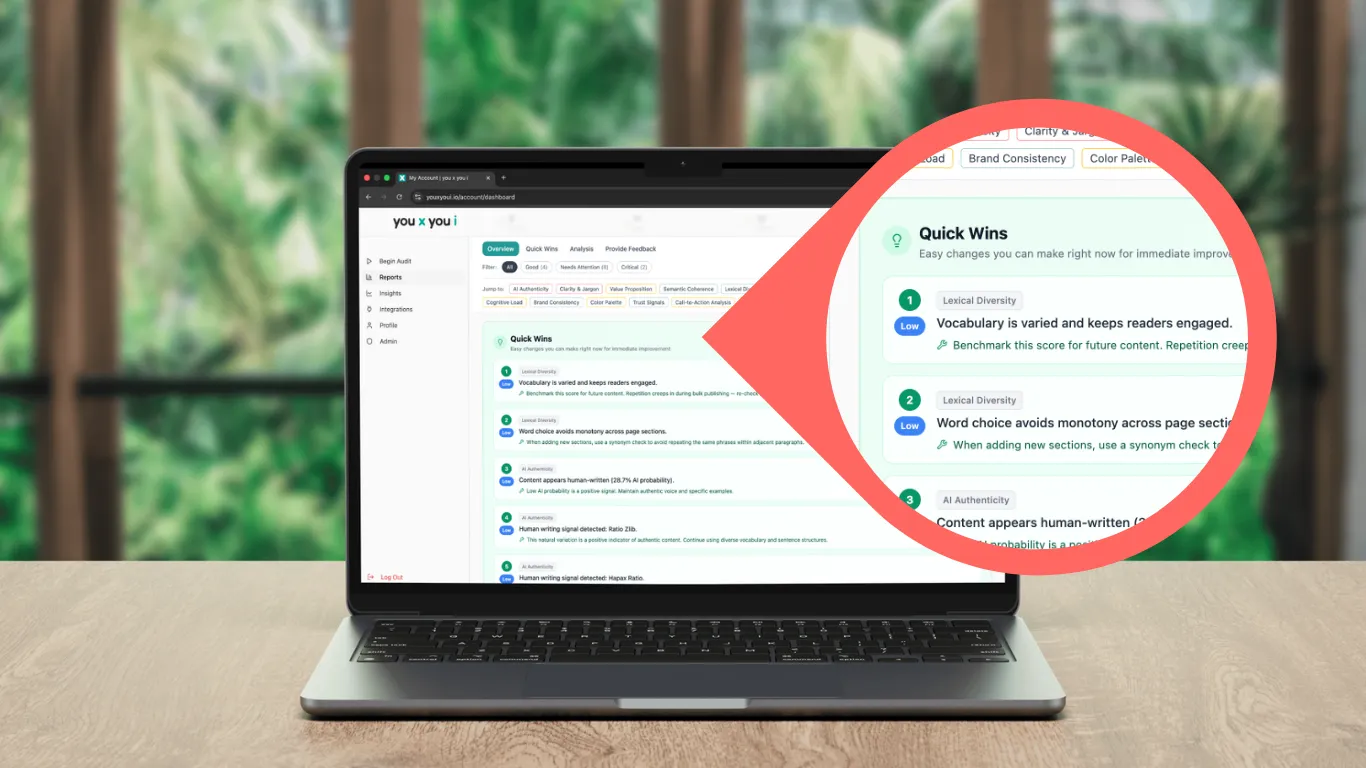
A good audit turns that pile of friction into a priority list. Instead of guessing, the team can focus on the pages and issues that are most likely to move revenue first.
Final takeaway
Website audits matter because they replace vague worry with clear next steps. They show what is:
- limiting search visibility
- slowing the site down
- confusing buyers
- blocking sales.
For SMB teams, that kind of clarity is often the difference between making random changes and fixing the problems that actually matter. If the site already has traffic, the audit is usually the fastest way to find out why more of that traffic isn’t turning into sales.